Computational Science and Engineering Capstone Project (APCOMP 297R)
The Computational Science and Engineering (CSE) capstone project is intended to integrate and apply the skills and ideas CSE students acquire in their core courses and electives. By requiring students to complete a substantial and challenging collaborative project, the capstone course prepares students for the professional world and ensure that they are trained to conduct research. Students deal with real-world problems, messy data sets, and the chance to work on an end-to-end solution to a problem using computational methods.
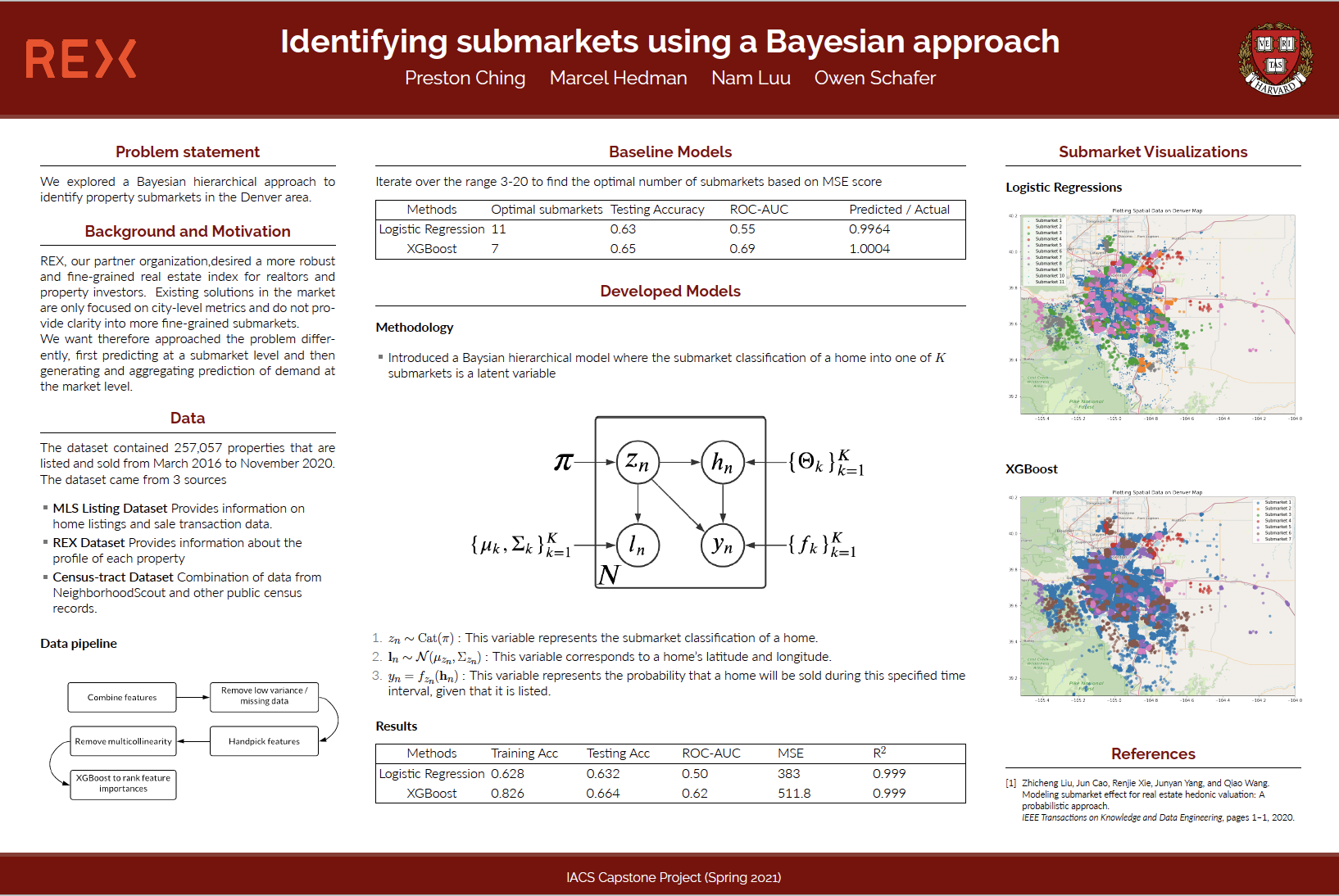
Identifying submarkets using a Bayesian approach
Title: Identifying submarkets using a Bayesian approach
Members: Nam Luu Nhat, Preston Ching, Marcel Hedman, Owen Schafer
About: In this project, we experiment on using a Bayesian hierarchical approach to identify submarkets of the Denver real estate market. The goal is to explore whether these submarket classifications, as a combination of geographical, physical and socio-environmental factors, will add value to the prediction of demand for residential housing in the Denver area.
Various methods for predicting unobserved gene expression in maize
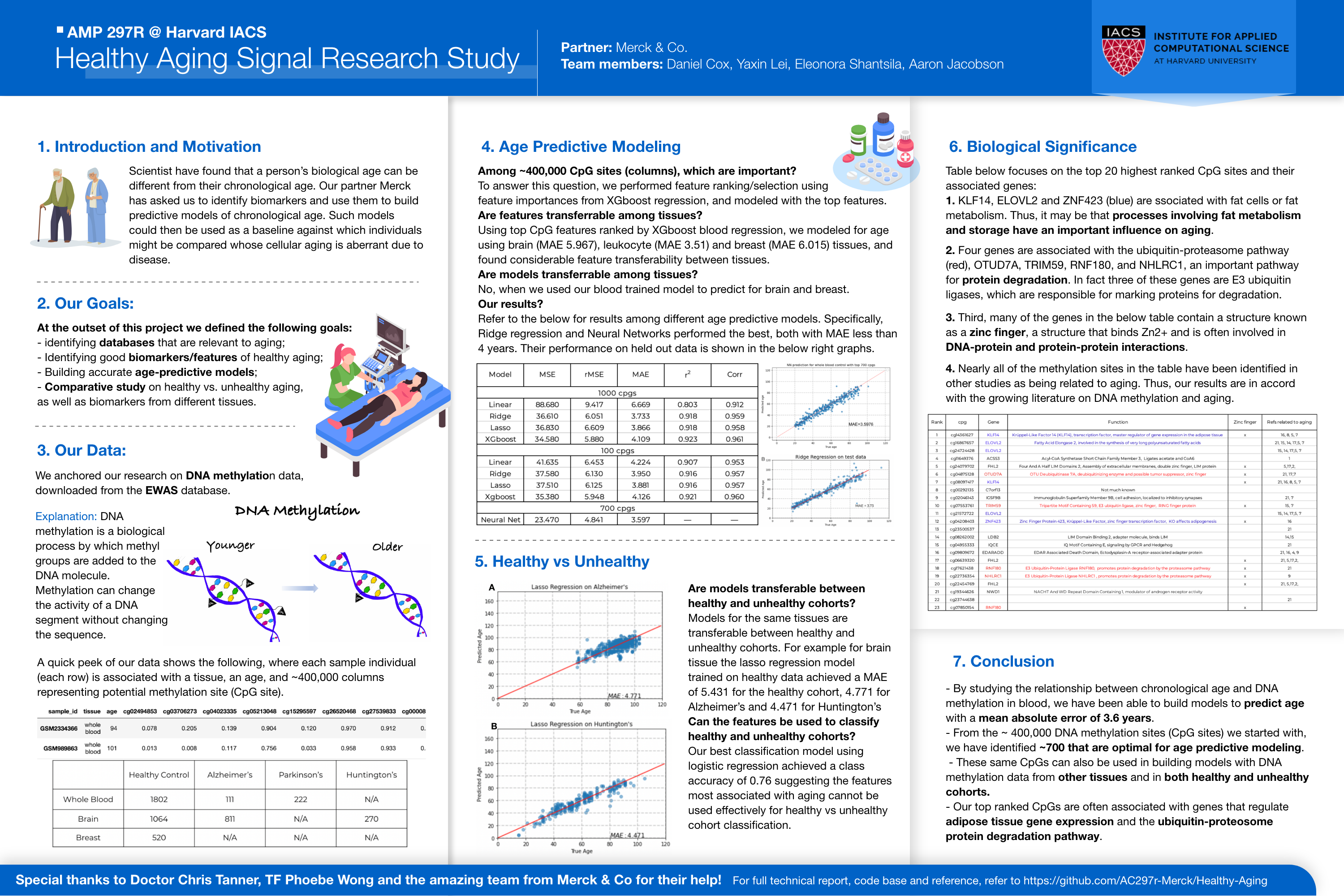
Healthy Aging Signal Research Study
Title: Healthy Aging Signal Research Study
Members: Eleonora Shantsila, Daniel Cox, Yaxin Lei, and Aaron Jacobson
About: The process of ageing causes observable changes in each of our cells. This process does not necessarily run at the same speed from person to person, meaning individuals of a given chronological age may have different biological ages. In this project we build models to predict true chronological age from DNA methylation data, with the goal of these to serve as a baseline against which specific individuals might be compared. Poor predictions would potentially indicate aberrant cellular ageing. Our best models predict chronological age over the entire range of adulthood to an error of less than four years.